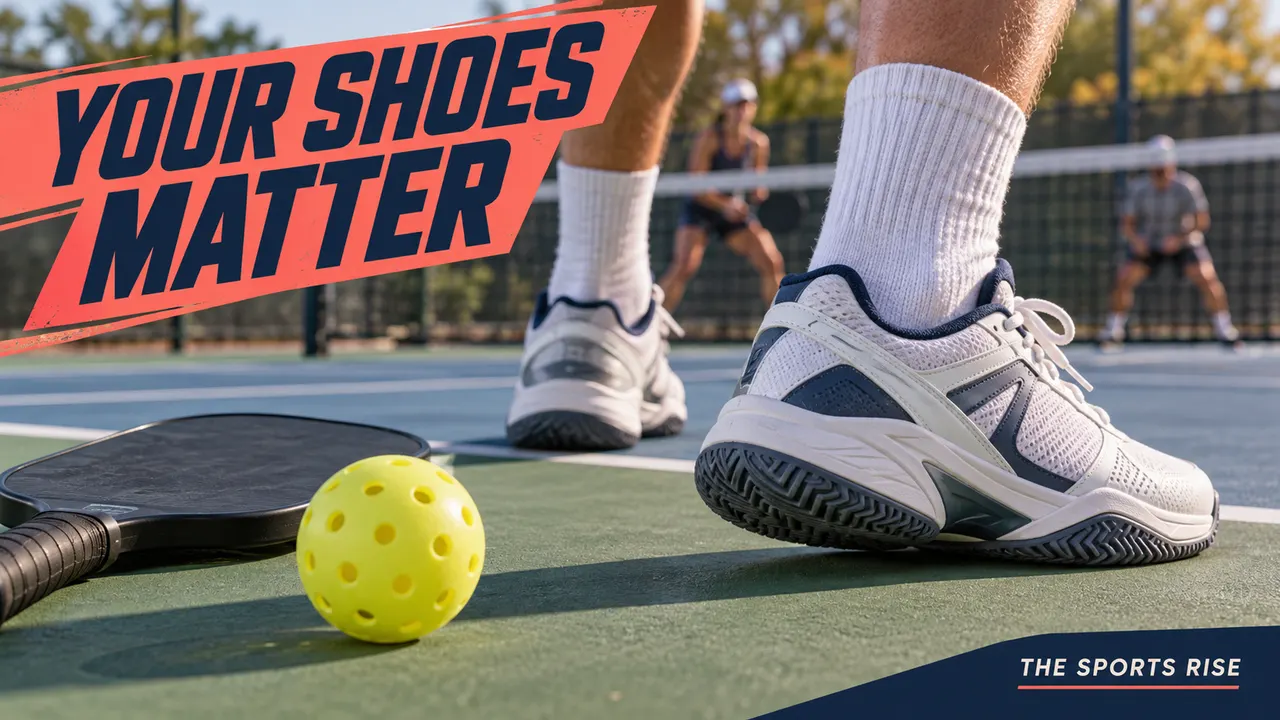
The straight answer, before the marketing gets to you
The most dangerous shoe on a pickleball court is the one you already love. People show up in their comfy running shoes, the cushioned pair they trust for the gym, and assume comfort equals safe. It's the exact opposite. Those tall, soft heels are built for running in a straight line, and the instant you cut sideways for a dink they tip your ankle outward and hand you a sprain. So do you need special shoes for pickleball? Maybe. But you almost certainly need to get out of the running shoes first.
Here's the part the shoe ads won't lead with. Pickleball is a side-to-side sport played on a small court. You shuffle, you split-step, you lunge for a dink and stop hard. Your shoes either grip that sideways load or they let your foot slide off its own base. And one popular type of shoe, the one most newcomers already own, does the second thing.
Key takeaways
• Casual vs regular: If you play pickleball a few times a year, your gym sneakers are fine; if you're on court weekly, a court shoe earns its price fast.
• The Roll Tax: Running shoes carry a hidden cost on a pickleball court: a tall, soft heel that tips your ankle outward when you cut sideways.
• Tennis shoes pass: Hard-court tennis shoes share the herringbone sole and lateral support pickleball needs, so they're a genuinely good stand-in.
• Ankles take the hit: Ankle sprains were the single most common lower-body pickleball injury in a 2024 clinical review, at 21.7% of cases.
• Indoor vs outdoor: Indoor play wants a non-marking gum sole; outdoor concrete chews through soft soles, so durability matters more.
Do you need special shoes for pickleball, or is that a myth?
Court shoes aren't strictly mandatory to play. Plenty of people get on a court in whatever sneakers they own and have a great time. But "you can play in anything" and "anything is safe" are two different claims, and the gap between them is where injuries live.
Use this threshold. If you play fewer than roughly twice a month, recreationally, on a forgiving surface, your existing cross-trainers or hard-court tennis shoes will do. Buy a paddle first and worry about shoes later. New to the gear question entirely? Start with the best beginner pickleball paddle picks and treat shoes as the next upgrade, not the first.
But once you're playing weekly, drilling, or chasing balls in the non-volley zone where the fast hands battles happen, the math flips. You're loading your ankles thousands of times a session. That's when a dedicated court shoe stops being a luxury and starts being insurance.
Court vs tennis vs running: the three shoes you already own
Forget the top-ten product roundups for a second. Almost everyone arriving at a pickleball court is choosing between three pairs they already have. Here's how those three actually stack up for this specific sport.
| Shoe type | Lateral support | Sole + grip | Ankle-roll risk | Verdict for pickleball |
|---|---|---|---|---|
| Dedicated court / pickleball | High (elevated sidewalls, reinforced upper) | Non-marking herringbone, low to the ground | Lowest | Best: buy if you play weekly |
| Hard-court tennis | High (built for the same cutting) | Herringbone, slightly heavier build | Low | Fine: a real stand-in |
| Running / trainers | Low (made for straight-line motion) | Tall, soft heel; poor side grip | Highest | Avoid: the real hazard |
Look at that last column. It's not the marketing pitch for buying a fourth pair of shoes. It's a safety ranking. And it points straight at the one type you should leave in the closet.
Why running shoes are the real hazard, not a harmless shortcut
This is the part worth getting right. Running shoes feel comfortable, so people assume they're a safe default. They're not, and the reason is structural. Running shoes are built for forward motion, not the lateral stability the court demands, per Selkirk's footwear breakdown. A tall, cushioned heel stack that's great for absorbing a straight-line stride becomes a liability the instant you push off sideways. It raises your foot off its base and tips the ankle outward.
I'll admit I underrated this for a while. The comfort fools you. But the injury data is hard to argue with. In a 2024 clinical review of pickleball and paddleball injuries, ankle sprains were the most common problem patients showed up with, and the most common way they got hurt was a sudden change in direction. Soft, tall, forward-built shoes make exactly that movement worse.
"The most common injury presented to the outpatient clinic was a sprain injury of the ankle (36, 21.7%)... the most common mechanism of injury involved a sudden change in direction during sport." Opara et al., Cureus, 2024
Read that mechanism line again: sudden change of direction. That IS pickleball. So the shoe that handles direction changes worst is the worst possible choice, and it happens to be the one most beginners reach for. That's the published evidence, not a sales pitch.
The Roll Tax: the extra ankle-sprain risk you pay every time you cut sideways in a tall-heeled running shoe instead of a flat, supportive court shoe. You don't see the bill until your ankle pays it. Court and tennis shoes sit lower and wider, so they keep that tax close to zero.
When tennis shoes are good enough (and they often are)
Good news if you already play tennis or own a hard-court pair: you're mostly covered. Pickleball and tennis court shoes share the same herringbone tread (named for looking like a fish spine) and the same job of holding you steady through lateral cuts, per The Dink's footwear comparison.
The differences are real but small. Pickleball-specific shoes keep you lower to the ground in the forefoot with elevated lateral sidewalls for extra support, and they tend to run lighter. K-Swiss's pickleball court shoes launched in 2020 around two ounces lighter than their tennis equivalents. Lighter helps in a sport built on quick resets. But "lighter and a touch lower" is a refinement, not a requirement. A hard-court tennis shoe gives you the support and grip that matter most. Don't rush out to replace one if you've got it.
Where tennis shoes fall short is the wallet timeline, not the safety one: they can feel slightly heavy and wear differently on gritty outdoor pickleball courts. For most players that's a non-issue. The point stands. If the choice is tennis shoes versus running shoes, tennis wins every time.
Indoor vs outdoor pickleball shoes: the one real upgrade decision
If you do buy a court shoe, the split that actually matters is where you play. Indoor courts (gym floors, dedicated facilities) call for a non-marking sole — usually a softer gum rubber that grips polished wood and doesn't leave scuffs. Court shoes use non-marking soles to keep stability without marking the floor, which most indoor venues require anyway.
Outdoor concrete and asphalt are a different beast. They're abrasive, and a soft indoor sole wears out fast on them, so outdoor play rewards a harder, more durable outsole built to survive hard stops and sliding. It's the same logic as the gear itself: the indoor vs outdoor ball difference exists for the same surface reasons. Play both? A reasonable middle-ground outdoor-durable shoe handles indoor courts fine; the reverse wears out quickly.
One more thing worth your attention if your feet or joints already complain: support and cushioning aren't just performance perks. Players managing aches the way they'd manage a paddle for tennis elbow should weight comfort and stability heavily. And if you're older or returning to sport, footwear is part of the bigger picture covered in how often seniors should play pickleball.
The verdict: pay attention to the Roll Tax, not the hype
So, do you need special shoes for pickleball? If you play often, yes: a dedicated court shoe is worth it, mostly for what it protects, not how it performs. If you play occasionally, no, your tennis or cross-training shoes will carry you fine. The only firm rule for everyone is the one nobody's selling you: get out of running shoes, because their tall, forward-built design hands you the Roll Tax on every sideways cut.
Where you stand on court matters as much as what's on your feet, so once the footwear's sorted, tighten up your doubles court positioning and you'll cut sideways less in the first place. Curious how this compares to its racket-sport cousin? The footwear logic carries over to padel vs pickleball court differences too. And if you're still kitting out, the pickleball hub has the rest.
Written by Miguel Torres, Managing Editor. Every figure here was checked against Selkirk's pickleball-footwear guide, The Dink's tennis-vs-pickleball court-shoe comparison, and the 2024 Cureus lower-extremity injury review (Opara et al.). Published June 30, 2026. Questions or corrections: editorial@thesportsrise.com.
Frequently asked questions
Can you wear running shoes for pickleball?
You can, but you shouldn't make it a habit. Running shoes are built for forward motion and have a tall, soft heel that tips your ankle outward on lateral cuts. Since a sudden change of direction is the most common pickleball injury mechanism, running shoes raise your sprain risk more than any other common footwear choice.
Can you use tennis shoes for pickleball?
Yes, hard-court tennis shoes are a strong substitute. They share the herringbone tread and lateral support pickleball needs. Dedicated pickleball shoes sit a little lower and run lighter (K-Swiss's launched about two ounces lighter than tennis pairs in 2020), but the safety gap between tennis and pickleball shoes is small.
Are pickleball shoes really necessary for beginners?
Not on day one. A casual beginner playing a couple of times a month is fine in existing court or cross-training shoes. Buy a paddle first. Dedicated pickleball shoes become worth the money once you're playing weekly and loading your ankles through repeated lateral movement.
What's the difference between indoor and outdoor pickleball shoes?
Indoor shoes use a softer non-marking gum sole that grips polished floors without scuffing, which most indoor venues require. Outdoor shoes need a harder, abrasion-resistant outsole because concrete and asphalt wear soft soles down quickly. An outdoor-durable shoe usually works indoors too; the reverse wears out fast.
Do special pickleball shoes actually prevent ankle injuries?
They reduce risk rather than eliminate it. Court shoes sit lower and wider with reinforced sidewalls, which keeps your foot over its base during the side-to-side movement that causes most sprains. In a 2024 clinical review, ankle sprains were the most common lower-body pickleball injury at 21.7% of cases, so footwear that resists rolling genuinely helps.